Why Does Finding God's Plan Feel So Terrifying?
You're not weak for feeling paralyzed. The fear is predictable. When you believe there's ONE specific path and your job is to decode it... every decision becomes high-stakes. Every fork in the road feels like potential disaster. Miss the sign, miss your destiny.
That framework creates what psychologists call intolerance of uncertainty. And here's what the research shows: when intolerance of uncertainty is high, using religion for coping actually increases depression rather than reducing it. A 2019 study of 885 participants found that for people with above-average intolerance of uncertainty, coping-based religious motives connected to greater depression.
Read that again. The more anxiously you try to use faith to cope with uncertainty about God's will, the worse your mental health becomes. Your sincere pursuit of God's plan is making you miserable. Not because you're doing it wrong, but because the framework itself is broken.
What Does the Fear Actually Reveal?
The anxiety reveals a theology problem, not a discernment problem. You're treating God like an examiner with a hidden answer sheet, not a Father who delights in His children.
Research on divine control beliefs reveals something counterintuitive: people who place more dependence on God actually report a greater sense of personal control, not less. Trusting God's sovereignty should increase your sense of agency. If it's doing the opposite, something has gone sideways in how you're framing divine guidance.
A 2019 study of 1,251 college students found that students who believed both they AND God shared full control over outcomes showed 148% greater odds of high-quality sleep compared to those with low personal and divine control. The best outcomes came from partnership, not paralysis.
The model that works isn't "God has a script, I must decode it." It's "God is sovereign, AND I have agency. Both/and, not either/or."
Is God's Will Really a Narrow Tightrope?
The "one specific path" framework sounds spiritual. It's actually more Gnostic than Christian. Secret knowledge for the initiated. Hidden meanings to decode. And if you're not spiritual enough to read the signs? Too bad.
That's not the God of Scripture.
Balaam was a prophet. He was supposed to be the guy who could discern spiritual things. And he was so locked into his own plan that he couldn't see what a donkey saw.
The story in Numbers 22 goes like this: Balaam saddles up, determined to go his own way. God puts an angel with a drawn sword in the path. The donkey sees it and stops. Balaam doesn't. He beats the donkey. This happens three times. Finally God opens the donkey's mouth: "What have I done to you, that you have struck me these three times?" Then God opens Balaam's eyes, and he sees the angel.
The point isn't that Balaam was bad at reading signs. The point is that God's guidance isn't dependent on your perfect spiritual perception. If God needed Balaam to change course, He made it happen. Dramatically. With a talking donkey.
You're not going to accidentally wander off into destruction because you didn't read the signs right. God is a Father who speaks, redirects, and guides His children. He's not playing hide-and-seek with your destiny.
"The secret things belong to the LORD our God, but the things that are revealed belong to us and to our children forever, that we may do all the words of this law." (Deuteronomy 29:29, ESV)
Some things aren't yours to know in advance. The specific career, the specific spouse, the specific city... these may be "secret things." But God's love, His purposes for His people, His character? These are revealed. You have Scripture. The Holy Spirit. Wisdom. A brain. That's enough.
What Does the Gospel Say About Decision-Making?
Here's where the framework shift happens. The question isn't "how do I find God's hidden plan?" The question is "what kind of Father do I have?"
"For all who are led by the Spirit of God are sons of God. For you did not receive the spirit of slavery to fall back into fear, but you have received the Spirit of adoption as sons, by whom we cry, 'Abba! Father!'" (Romans 8:14-15, ESV)
If your relationship with God's will is characterized by terror of getting it wrong, that's not the Spirit's work. That's a reversion to slavery. The Spirit we received leads us as sons and daughters, not hostages. "Abba" is intimate trust, not formal religious compliance.
The gospel says your worth was settled at the cross, not at the moment you "discover your calling." You didn't decode your way into God's family. You were adopted. While you were still a sinner, Christ died for you. That's the posture: you're already in. Already loved. Already secure.
From that security, you make choices. You use the tools you've been given. You trust that your Father is big enough to work through imperfect decisions.
"Who is the man who fears the LORD? Him will he instruct in the way he should choose." (Psalm 25:12, ESV)
Notice: God instructs. He doesn't hide the answer and watch to see if you guess correctly. He teaches those who trust Him. The condition isn't perfect discernment. It's humble fear of the Lord. If you're genuinely seeking to honor God, He promises instruction. That's relationship, not riddle.
What Does This Look Like in Real Life?
Ruth stood at a crossroads. Her husband was dead. Her mother-in-law Naomi was returning to Israel. Every practical consideration said: stay in Moab. Remarry. Rebuild your life in familiar territory.
Instead, she made a choice. "Where you go I will go, and where you lodge I will lodge. Your people shall be my people, and your God my God."
Ruth had no roadmap. No detailed script. She couldn't see that she would end up in the lineage of King David. Of the Messiah. She simply chose faithfully with the wisdom she had. And God wove her decision into His redemptive plan.
Her worth wasn't contingent on choosing "correctly." She chose faithfully, and God's sovereignty worked through her choice. That's the model. Make wise choices with the information you have. Trust God with the outcomes. Watch Him weave your story into something bigger than you could decode in advance.
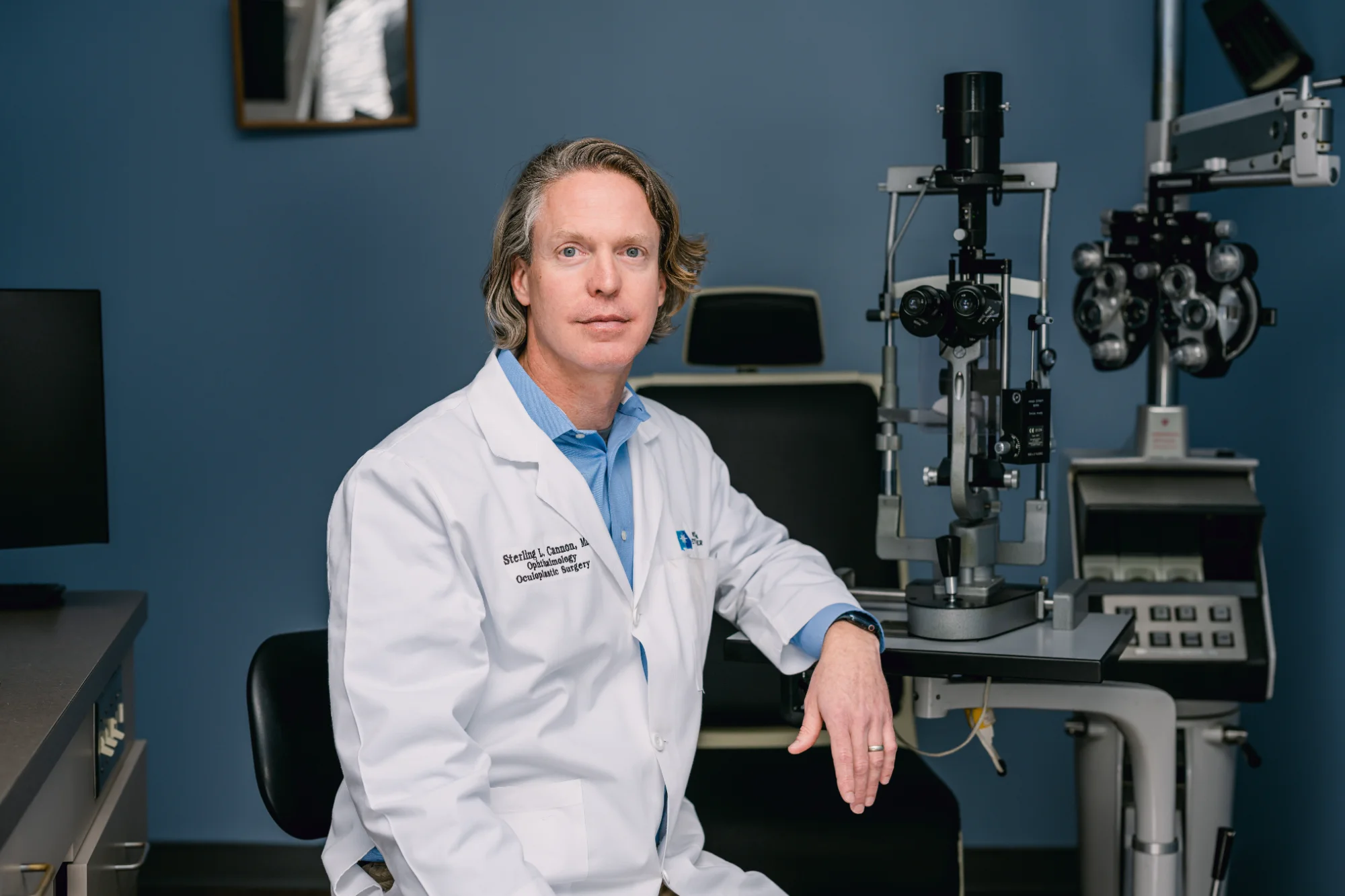
I remember staring at the phone for ten minutes, walking away, coming back. I had to call the music school dean and tell him I was switching majors. Junior year of college, and I'd realized I could work really hard to be as good as the best percussionists and still have a semi-marketable skill while competing with everyone who loved drums as much as I did.
The dean sounded like a timeshare salesman when he called back. "What about the equipment you promised? What about the plans we made?"
After I hung up, I went downstairs and played drums. Not saying goodbye to it. Just knowing that was a fork. You don't have complete peace about anything when you're young. You just go making decisions.
I ended up in medicine. Through chemistry, then biology, then surgery. You sort of bounce around until something fits. And there's nothing wrong with that. The plan you think is guaranteed? It's not. I watched a guy with awesome grades and great scores not get matched on Match Day. Everyone's heart dropped because we didn't even think that was an option.
He bounced back. Did fine. But the moment stuck with me. The guaranteed path isn't guaranteed. And God is still God.
What Actually Helps?
A longitudinal study tracking adults over 2.5 years found that positive religious coping consistently predicted better wellbeing, while negative religious coping predicted worse outcomes. Positive coping is confident, constructive turning to God. Negative coping is religious struggle and doubt disguised as spiritual diligence.
The "fear of missing God's plan" framework is negative religious coping in action. It produces the opposite of peace.
The shift looks like this:
From paralysis to movement. Decisions become possible because getting it "wrong" doesn't have catastrophic consequences. God can work with imperfect choices. A 2025 experimental study demonstrated that intolerance of uncertainty directly causes indecisiveness. Lower the stakes, and movement becomes possible.
From decoding to relationship. Prayer shifts from "show me the hidden answer" to "Father, I trust You with this." You're not searching for clues. You're walking with a Father who instructs the humble.
From anxious vigilance to restful obedience. Following God becomes walking with Him rather than anxiously scanning for hidden signs. The Spirit leads children, not hostages.
From self-doubt to settled identity. Worth isn't tied to making the "right" choice. It was secured at the cross. Bad decisions don't make you a bad person or derail your eternal significance.
The Deeper Truth
You can't derail the plans of the Almighty with your finite decisions. If God wanted to stop Balaam, He used a donkey. He's capable.
The problem isn't that you might miss God's plan. The problem is framing divine guidance as a fragile tightrope when Scripture reveals a sovereign Father who delights in His children. A Father who instructs the humble. Who sent His Son to die for you while you were still a sinner.
That's the God you're dealing with. Not an examiner with a hidden test. A Father who adopted you, who leads you by His Spirit, who works all things together for the good of those who love Him.
Make wise choices. Use the tools you have. Walk faithfully. And trust that your Father is big enough to redirect you if needed. He's not playing hide-and-seek with your destiny.
Your worth was settled at the cross. Now go make decisions.